
Pokies RTP explained, the engineer's plain-language walkthrough
 By Colton Bergquist, Slot cabinet engineer and
mechanics analyst
By Colton Bergquist, Slot cabinet engineer and
mechanics analystPublished 18 July 2026. Updated 24 July 2026.
RTP defined cleanly, without marketing fog
Return to player, universally abbreviated RTP, is a single number expressed as a percentage. It is the sum, across every possible outcome of a spin, of the payout for that outcome times the probability of that outcome, divided by the stake. In plain terms, it is the average dollars returned to the player for every dollar staked, evaluated over a very large sample.
Two properties matter. First, RTP is a computed property of the paytable and the reel weightings. It is not a claim about a session outcome and it is not a promise. Second, RTP is defined as a limiting behaviour. The arithmetic converges on the RTP value as the number of spins grows large, in the same sense that flipping a fair coin a million times converges on fifty percent heads. A hundred spins do not converge; ten thousand spins converge weakly; a million spins converge tightly.
For a recreational player, this means RTP is a design-time parameter that has small direct influence on any single session and large cumulative influence on a career of many sessions. The engineering perspective is that RTP is important but that it is dominated by variance in the short run.
Theoretical RTP versus realised session RTP
The word theoretical does real work in the phrase theoretical RTP. It means the value computed from the paytable, not the value observed in any specific play sample. Realised RTP is what you actually experience, and it differs from theoretical by an amount driven by variance.
A typical three hundred spin session on a ninety six percent RTP mid volatility title will produce a realised RTP anywhere between about sixty and one hundred and thirty percent, with occasional outliers outside that range. The realised value can even be zero (you lost every spin) or several hundred percent (you hit a jackpot). Neither outcome is a signal about the machine.
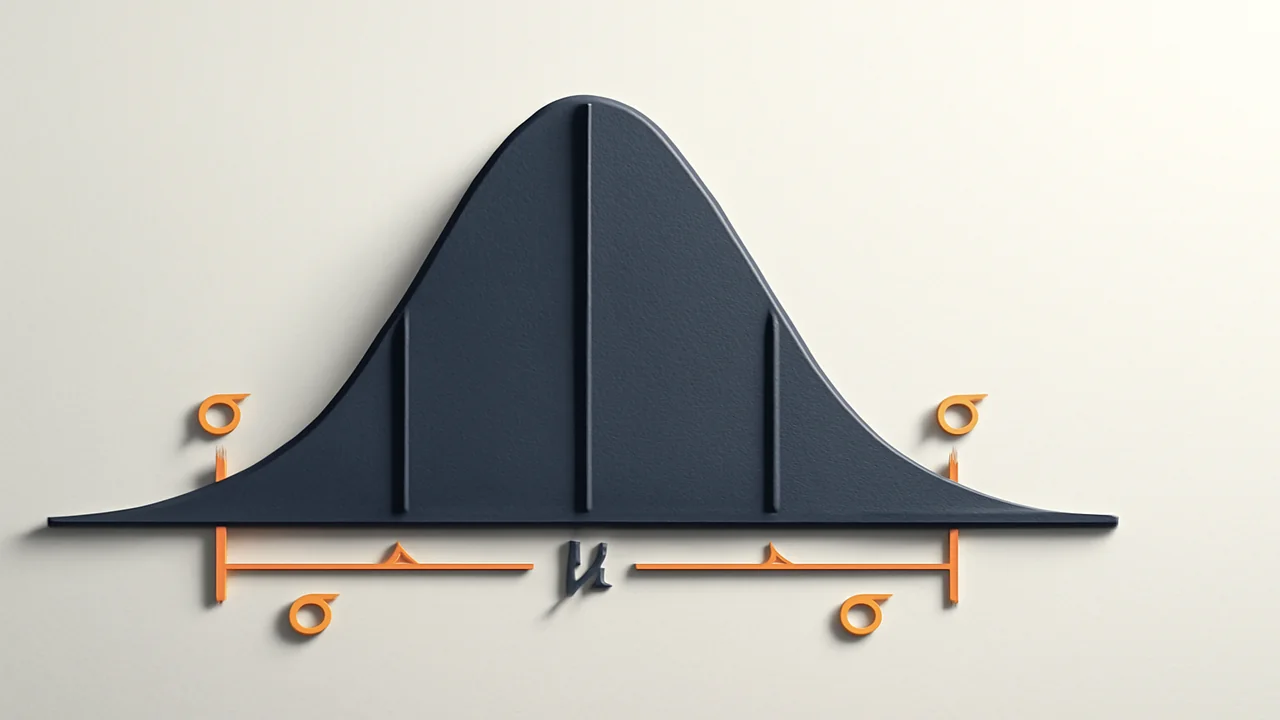
Statisticians describe this using confidence intervals around the mean. A two-sigma interval covers about ninety five percent of session outcomes. For a mid volatility title at reasonable stakes, that interval typically spans roughly plus or minus forty percentage points of realised RTP over three hundred spins.
What this means for the recreational player. Do not read your session outcome as evidence about the machine. Read it as one draw from a wide distribution around the theoretical value.
How the paytable actually produces RTP
The paytable is a table that lists every winning outcome (specific symbol combinations across specific paylines or Ways-to-Win positions) and the payout multiple for each. The studio's mathematician assigns probabilities to each outcome using the reel weightings, computes the expected value across all outcomes, and adds the contributions from bonus features and free spins.
Bonus features are typically the largest single contribution to modern pokies RTP. A base game paytable might contribute sixty percent of the total RTP, and the bonus features contribute the remaining thirty six or thirty seven. That imbalance is why some sessions never trigger a feature and burn the bankroll faster than the RTP suggests; the RTP is banked in features that you have not seen this session.
Free spins, pick-me bonuses, wheel-of-fortune bonuses and jackpot links all sit inside this feature contribution. Each is a separate mini-paytable with its own expected value, and each triggers on a probability calibrated against the base game.
Certification labs audit the paytable and probability model as a whole. A pass at certification means the maths reproduces the published RTP within tight tolerance across a very large simulation, typically hundreds of millions of spins.
Reel weightings and virtual reel strips
The visible reel on the screen typically shows twenty or thirty symbol positions. The virtual reel behind the scenes has between one hundred and five hundred and twelve positions, with each visible symbol appearing on the virtual strip at a specific weighting.
A high-value symbol might appear on the virtual strip only a few times, while a filler symbol might appear thirty or forty times. When the RNG draws a virtual position, the visible symbol at that position is what shows on screen. This is what produces the illusion of random reel positioning while giving the studio precise control over the payout probability.
An engineer would call this an importance-sampled distribution. A player experiences it as a reel that shows the low-payout symbols much more often than the high-payout symbols, which is exactly the design intent. It is not deception; it is how the underlying maths works.
Weighting patterns vary by studio. Aristocrat cabinet titles use a distinctive weighting pattern that experienced players can spot at a glance. Novomatic titles use a different pattern. NetEnt online titles use yet another. None is objectively better; they are design choices that produce different felt experiences at similar RTPs.

Volatility and sigma, the shape below the mean
Volatility is the everyday word. Sigma is the engineering measurement. Both describe the shape of the payout distribution around its mean.
Sigma is the standard deviation of the per-spin payout divided by the stake. On a mid volatility title sigma sits around five to eight. On a high volatility title, above eight. On extreme volatility (megaways and jackpot titles), above fifteen.
The interaction with session length. Standard deviation of the session outcome equals stake times sigma times the square root of spin count. Double the session length and the range of possible session outcomes grows by a factor of the square root of two, or about forty one percent. Increase the sigma by a factor of two and the range doubles.
Practical calibration. Match sigma to your session goal. Low sigma for long grinding sessions with narrow outcome range. High sigma for short sessions with dramatic outcome range and the possibility of a spectacular win. Both are legitimate; neither is objectively better.
Hit frequency arithmetic and average win size
Hit frequency is the proportion of spins that return a payout above zero. Its arithmetic relationship with RTP is direct. If RTP is X and hit frequency is H, then average win among winning spins is X divided by H, expressed as a multiple of stake.
A ninety six percent RTP title with thirty percent hit frequency has an average win of three point two units of stake. A ninety six percent RTP title with twenty percent hit frequency has an average win of four point eight units. Both distributions have the same expected total return but different session-feel.
Sub-stake wins are worth naming. A one dollar spin that returns forty cents counts as a hit for hit frequency purposes but is a loss for the player. Modern cabinets and their online equivalents celebrate these small wins with animations, which produces the sensation of frequent success even when the bankroll is declining. Engineers call this a losses-disguised-as-wins effect and it has been studied academically since at least Dixon and colleagues in 2010.
None of this is malicious per se; it is a design choice. Recognising it as a design choice rather than a signal is the useful engineering habit.
Session length effects on realised RTP
Session length interacts with RTP in a specific mathematical way. As spin count grows, the range of realised RTP shrinks around the theoretical value, and the expected loss grows linearly. The two effects together mean that long sessions reliably lose money and short sessions unpredictably win or lose money.
Worked example. Ninety six percent RTP, sigma six, one dollar stake. Over one hundred spins the standard deviation of outcome is sixty dollars and the expected loss is four dollars. Over one thousand spins the standard deviation is one hundred and ninety dollars and the expected loss is forty dollars. Over ten thousand spins the standard deviation is six hundred dollars and the expected loss is four hundred dollars.
The signal to noise ratio is what matters. At one hundred spins the standard deviation is fifteen times the expected loss; the noise is enormous relative to the signal. At ten thousand spins the standard deviation is one and a half times the expected loss; the noise is comparable to the signal. This is why RTP matters at the scale of a career of play and not at the scale of a single session.
Multi-RTP configurations and served RTP
Modern pokies studios frequently ship a single title in multiple paytable configurations, each certified separately, and let the operator select which one to serve. Configurations typically span ninety two to ninety seven percent, though some studios go higher or lower.
This means the marketing RTP is not necessarily the served RTP. The value that matters is the one loaded on your specific operator's platform. Well-run operators publish it prominently, either in the game info panel or in a public RTP release document, and are ready to answer specific questions in support chat.
The industry conversation on this practice has grown in recent years. The UK Gambling Commission has effectively narrowed multi-RTP releases for UK-facing operators. Australia-facing offshore operators are not under that constraint, so the transparency remains a differentiator between good and poor operator conduct.
How to verify served RTP as a player is covered in the moneypage on high RTP PayID pokies. Short version, read the in-game info panel, cross-check against the studio publication, ask support directly.
What certification actually covers on an RNG
Certification laboratories such as GLI, iTech Labs, BMM and eCOGRA assess RNGs and paytables against defined criteria. What they cover is worth knowing, because certification is often invoked in operator marketing without the specifics.
The RNG itself is tested against the NIST Statistical Test Suite, Diehard tests, TestU01 and gaming-specific tests for period length and seed recovery. A pass indicates the output is statistically indistinguishable from uniform random across a very large sample.
The paytable is audited against the published RTP through simulation, typically hundreds of millions of spins, with the observed return within tight tolerance of the claimed value. Reel weightings and bonus feature trigger probabilities are audited separately.
What certification does not cover. It does not cover the operator's conduct after the game leaves the lab. It does not cover the operator's cashier reconciliation reliability. It does not cover complaints handling or withdrawal SLA. Certification is a game-side property, not an operator-side property, and conflating the two is a marketing move.
Common misreadings of RTP in the wild
Five misreadings of RTP that surface repeatedly in forums and reader email, each with the engineering correction.
Misreading one, a ninety six percent RTP means I lose four cents per dollar. Correct if you interpret dollar as turnover, not dollar deposited. Turnover typically exceeds deposits by a large factor because winnings are re-wagered.
Misreading two, the machine is due for a payout. Independent between spins by design. Past outcomes carry no predictive information about the next spin.
Misreading three, this machine is cold today, it must be adjusted. RTP is not adjustable at run time by the operator. The served configuration is set at deployment and does not change based on session activity.
Misreading four, I hit a bonus so the machine will now go cold. Bonus outcomes are drawn from the same distribution as everything else. No compensating cold streak is engineered.
Misreading five, higher RTP always beats lower RTP. True in the very long run. Dominated by variance in the short run. Session sigma often matters more than a percentage point of RTP.
Australian context, cabinet floor RTP versus online RTP
Australian cabinet floor pokies (clubs, pubs, casinos) are regulated at the state level, with minimum RTP requirements that vary by jurisdiction. Typical minimum floors are eighty five percent in NSW clubs, eighty five in Victoria clubs, ninety in dedicated casino floors, with local operators often serving slightly above minimum.
Offshore online pokies, which is what a PayID pokies deposit is buying you, typically run at higher RTPs than the cabinet floor equivalent. Ninety four to ninety six is the mainstream range; ninety seven is common; ninety eight is available. The engineering reason is that offshore operators are competing internationally and can afford tighter margins on individual titles because their cost base is lower than a land-based venue with staff and property overhead.
Practical implication for the Australian player. The online version of a familiar cabinet title is typically running a higher RTP configuration than the same title on the club or pub floor. This does not automatically make online play better; the safety and consumer protection framework is materially weaker offshore, and the responsible gambling tooling in a regulated venue is not present.
Using RTP responsibly in your own play decisions
RTP is a tool. Like any tool, it can be used well or badly. Used well, it helps you pick titles that respect your bankroll and match your session goals. Used badly, it becomes a rationalisation for chasing losses.
Used well looks like a repeatable checklist before every session.
- 1Read the served RTP. Check the in-game info panel before you commit real money. If it is missing or below your floor, pick another title.
- 2Match volatility to temperament. Low sigma for long grinding sessions. High sigma for short feature-hunting sessions. Do not run high sigma on a small bankroll.
- 3Set stake by arithmetic. Bankroll divided by (stake times sigma) should sit above one hundred and fifty. That is your sustainable session length.
- 4Set stop-win and stop-loss. Cash out the moment either fires. Do not renegotiate mid-session; the whole design of the threshold is to be there at the moment you want to override it.
Used badly looks like this. See a ninety seven percent RTP claim. Assume it means you will win, or that a bad session is a bug. Chase the next spin under the theory that variance will correct. Deposit again. Rinse.
The engineering perspective is that no RTP number changes the structural fact that a pokie has a negative expectation by design. RTP under one hundred percent means the operator wins on average. What varies is how quickly and how noisily, and RTP together with sigma and hit frequency describes that.
If your play is not fun anymore, GambleAware is on 1800 858 858, twenty four hours a day, free and confidential. Gambling Help Online at gamblinghelponline.org.au offers web chat. Lifeline on 13 11 14. Beyond Blue on 1300 22 4636. Financial Counselling Australia on 1800 007 007. The IGA 2001 prohibitions attach to operators, not players; this article is educational and not legal advice.
Frequently asked questions
What is RTP in one sentence?
The long-run average return to the player expressed as a percentage of turnover, computed from the paytable.
Does a high RTP guarantee winning sessions?
No. It reduces the average cost per unit of turnover. Session outcomes remain dominated by variance.
What is the difference between theoretical and realised RTP?
Theoretical is the paytable computation. Realised is the observed value in your actual play, which differs from theoretical by an amount driven by sigma and spin count.
How are RTPs certified?
Independent laboratories simulate the paytable across hundreds of millions of spins and verify the observed return is within tight tolerance of the claimed value.
What is sigma in this context?
Standard deviation of per-spin payout divided by stake. It describes the shape of the distribution around the mean.
Can operators change RTP at will?
They can select from the studio's certified configurations. They cannot change the certified maths itself.
Why do sessions vary so much on the same title?
Because sigma is large relative to expected loss over any recreational session length. Variance dominates.
Is higher RTP always the correct choice?
Preferable at the margin, but variance and design fit usually matter more for a given session.
How do I check served RTP as a player?
Read the in-game info panel, cross-check against the studio's release document, ask support a specific question.
Is cabinet floor RTP the same as online RTP for the same title?
Usually not. Online versions typically ship at higher RTP configurations than the state-regulated cabinet floor version.
Does hit frequency change RTP?
No, they are independent parameters. Hit frequency changes average win size at a given RTP.
Where can I get help if my pokies play is a concern?
GambleAware on 1800 858 858, twenty four hours a day, free and confidential.